
Additional findings on Hartlaub’s Spurfowl nesting habitat
by Katrin Denker
On 3 July 2026 we visited a Black Eagle nesting site to find out whether it is occupied at the moment. Coming down the mountain slope in the early afternoon, we flushed a female Hartlaub’s Spurfowl from between the thick grass. We thought that she might be breeding and looked for a nest amongst the grasses and shrubs. My father eventually spotted the nest between some thick grasses just next to a large rock. The nest was slightly lined with grass, there were a few small feathers amongst the lining and the nest contained five eggs. It had however been plundered a short time ago. Three eggs were damaged with a hole broken into them on one side, from two of these the contents had been eaten completely, some liquid seemed to be left in the third one. One egg was still whole but had a small crack. One egg seemed to be intact, although it was little dirtied (probably from the contents of the broken ones) and had a small dried feather sticking to its side. The slope on which the nest was situated is relatively gradual, strewn (but not densely) with small boulders/large rocks and covered with thick grasses and some bushes. We took some photographs of the nest and its surroundings and then left.
As in the case of the Hartlaub Spurfowl nest which we found some years ago (see: Observations on Hartlaub’s Spurfowl) this nest was situated in an area that, though rocky, was more dominated by grasses than by boulders. So far most nests reported had been in more rocky terrain (Hockey et al.,2005), although one was situated amongst rocks and vegetation (Osborne, 2001), but the nests we found show that Hartlaub’s Spurfowls also nest in areas dominated by grasses and other vegetation.
It is also interesting that this nest contained five eggs; Hockey et al. (2005) record a clutch size of 2 – 4, usually 3 eggs. We have also seen Hartlaub’s Spurfowl’s with more than four young in the past.
I found it remarkable that the female would return to her nest after such a raid, and I wonder whether the broods of only one or two chicks which one occasionally sees are the result of small clutches or predation or whether a bird will also occasionally incubate and hatch only the few eggs left after a raid.
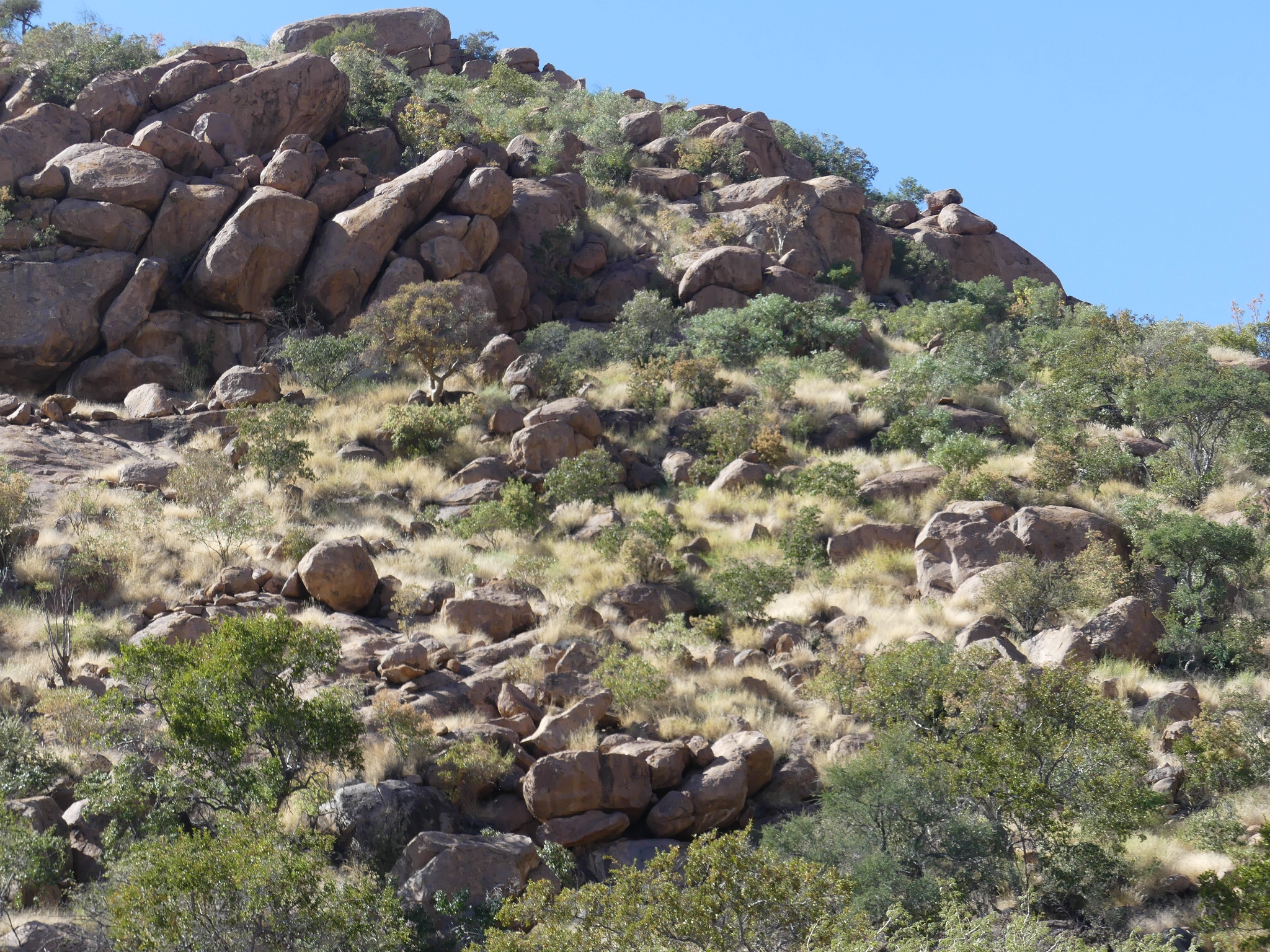
Overall view of the vicinity of the nesting site. Note the huge boulders which would have been available close by. The nest however was situated in the grassy part of the slope.
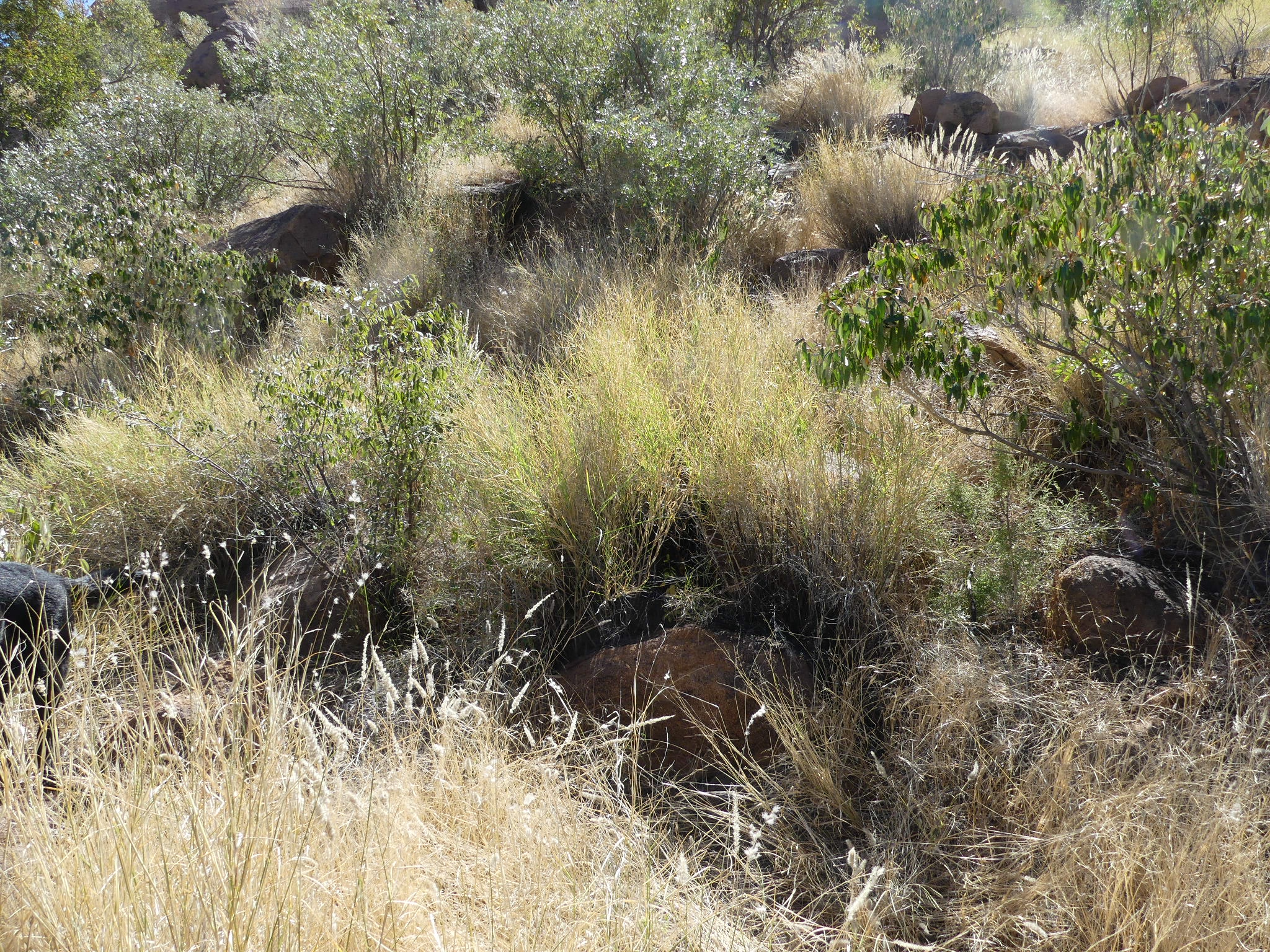
Immediate vicinity of the nesting site.
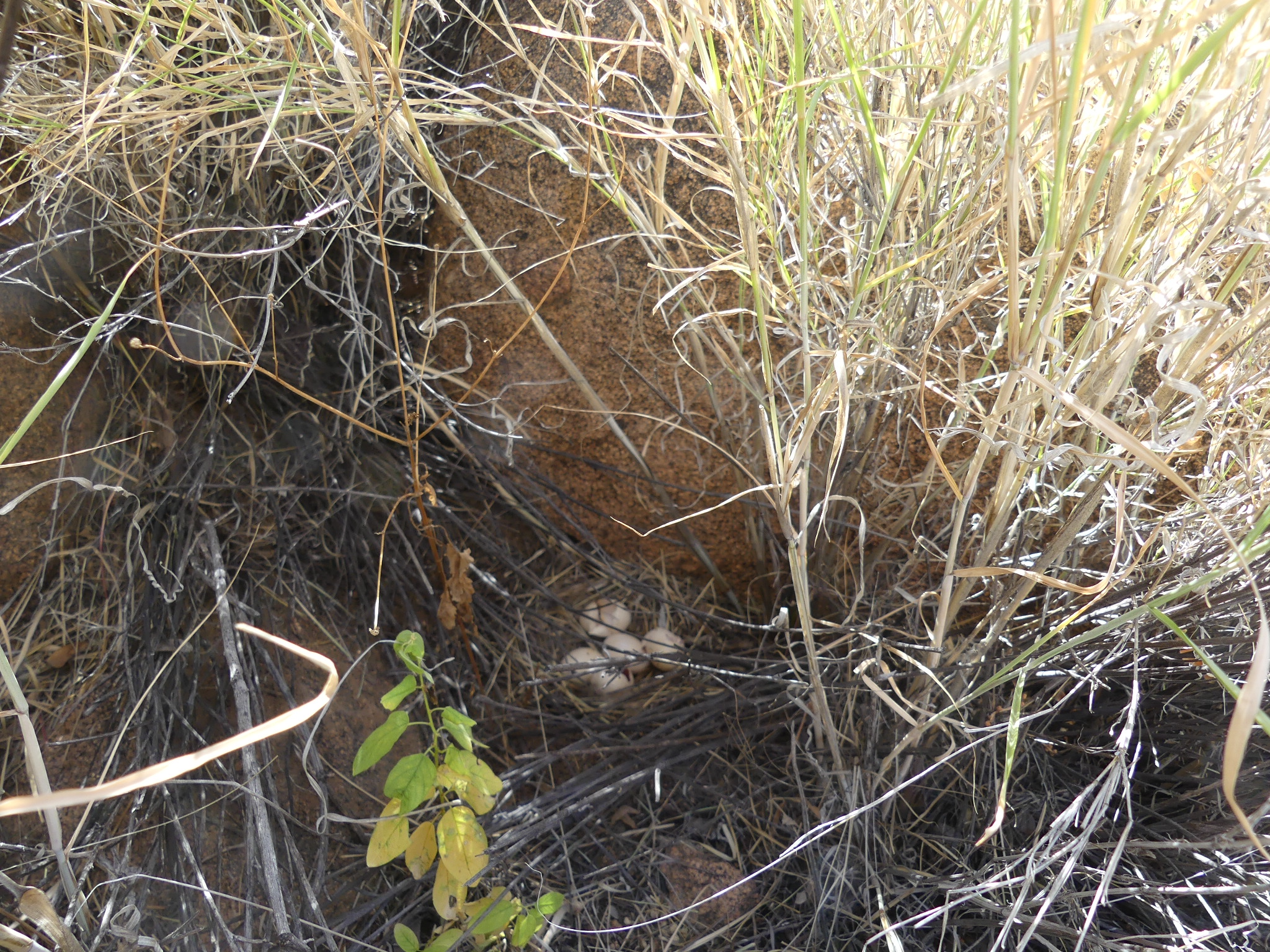
Nest from above.
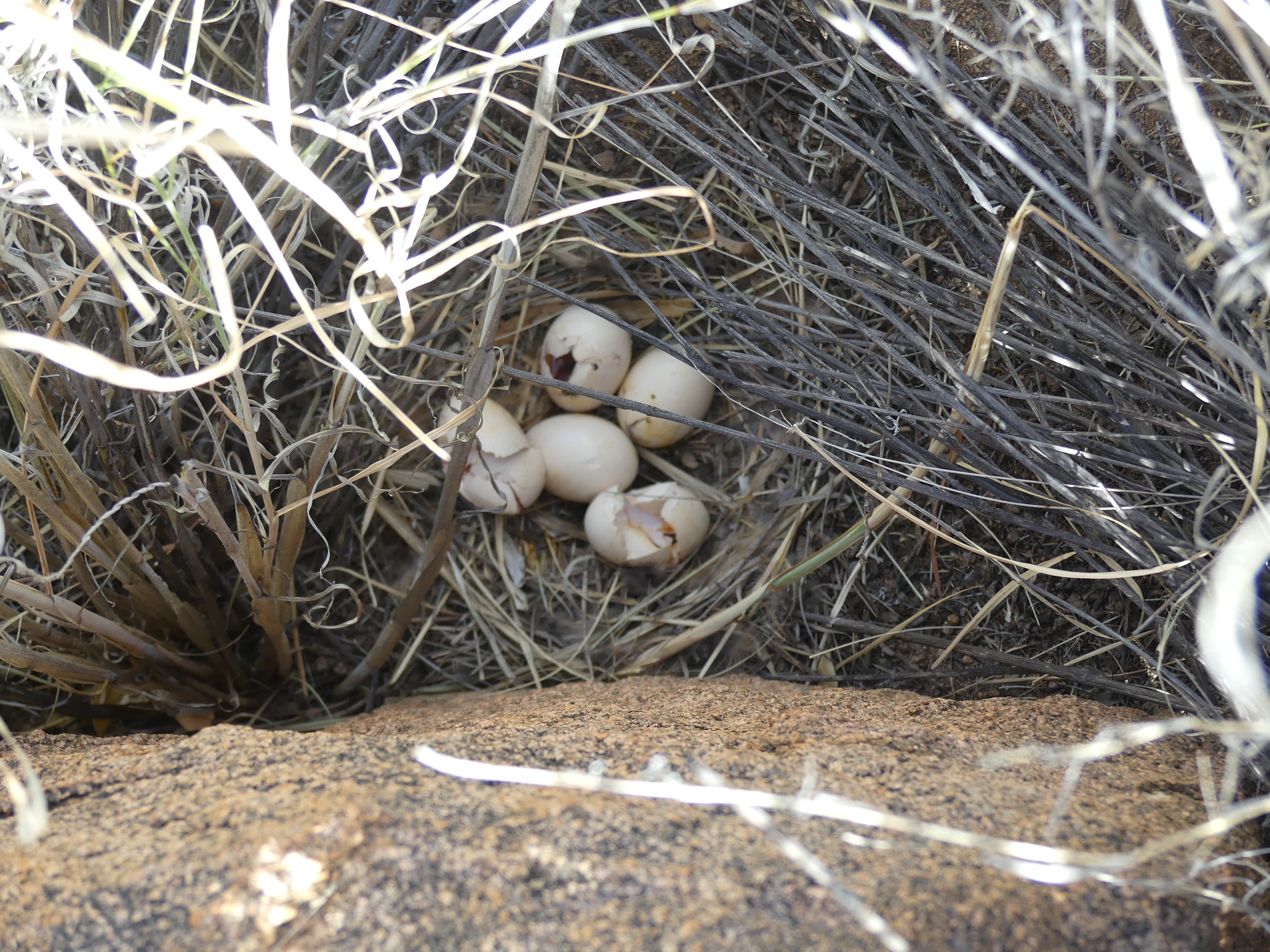
Close-up view of the nest.
References
Hockey, P.A.R., Dean, W.R.J., Ryan, P.G. (eds) (2005). Roberts – Birds of Southern Africa. VIIth ed. The Trustees of the John Voelcker Bird Book Fund, Cape Town.
Osborne, T. (2001). Hartlaub’s Francolin Breeding in Namibia. Lanioturdus 34(1): 16-18.
Available at: https://the-eis.com/elibrary/sites/default/files/downloads/literature/Hartlaubs%20Francolin%20breeding%20in%20Namibia.pdf